
My Family Tree Led to 19th-Century Smugglers, a Murder Trial, and a Royal Order from the King
The Secret That Waited 200 Years
Every family has its stories. But some secrets lie dormant for centuries, waiting for a single clue to bring them to light.
Mine began with a name, a memory passed down from my great-great-grandmother to my grandmother, and finally to me. It was a delicate thread of oral history, a simple starting point that would unravel into a story of crime, violence, and unimaginable royal intervention in the lives of my ancestors.
This is how a simple genealogy search uncovered a 19th-century smuggling ring, a brutal assault, a murder—and an order issued in the name of King George III.
Like all the best family history adventures, this one started with the people who came before. My grandmother had written down everything she knew, preserving memories of her grandmother and her great-grandmother, Emily Pierce, born in 1844 in the Sussex village of Hurstpierpoint.
Our research began there. Emily’s mother, Jane Pierce, was unmarried when Emily was born. Later, Jane married a man named George Still. Sure enough, by the 1861 census, Emily was listed as "Emily Still." and on her marriage certificate George is named as her father.
It was a classic case of assuming a stepfather was a biological father. A dead end? Not quite. It was time to find the primary source.
One Certificate, a Hidden Father, and a Brand New Family Line
Ordering Emily’s birth certificate was the key that unlocked the first door. In the space for "Father's Name," it didn't say George Still. It read:
James Bartley, shoemaker.
The name was entirely new to us. This single document didn't just correct a fact; it grafted an entirely new branch onto our family tree. The Bartley line was a complete mystery.
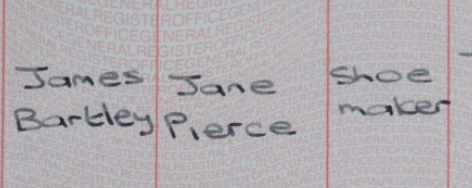
Caption: A small but powerful detail—this record names James Bartley Pierce and reveals his trade as a shoemaker, offering a glimpse into everyday life in the past.
Following the paper trail for James Bartley led us to his father, William, and his grandfather, Thomas Bartley, the landlord of the Royal Oak pub in Hurstpierpoint. At first glance, they were a typical village family: a publican, a shoemaker, living and working in their local community.
It seemed like a standard, if interesting, piece of genealogical research.
Until my mum found the book.
The Discovery That Ignited the Past
While researching, my mother stumbled upon a local history book:The Power and the Poverty: Life in a Sussex Village 1790–1850 by E.J. Colgate. Turning to the index, she searched for our new family name: “Bartley.”
What she found transformed our quiet family tree into a Georgian true-crime drama.
Thomas Bartley, the publican of the Royal Oak, wasn’t just pulling pints. He was a key figure in a network of Sussex smugglers.
Smugglers on the Downs: A Story of Violence and Betrayal
Smuggling In the early 1800s on the Sussex coast was rife, in some areas every man in the village would be involved. High taxes on goods like brandy, tea, and lace from France fueled a dangerous and lucrative black market. Gangs moved contraband inland across the South Downs, often under the cloak of darkness, clashing violently with the King's excise officers.
In September 1803, my ancestor Thomas Bartley and his associates had a fateful encounter on the Downs near Ditchling with Robert Bignall, a known informer. The meeting turned violent. Bignall’s jaw was broken, and he lost a tooth. Bartley and his men were arrested and brought before a magistrate, their case set for the January Assizes.
But the story was about to escalate dramatically.
Murder, a Royal Decree, and a Stunning Twist
Shortly after the assault, another smuggling gang clashed with excise officers. The very same informer, Robert Bignall, was present. In the chaos, a shot rang out, and a smuggler named Robert Webber fell dead. The gun was in Bignall’s hand.
Bignall fled but was eventually captured and charged with murder.
And this is where our family story takes a turn so extraordinary it feels like fiction. We uncovered aRoyal Order, issued in the name of King George III, concerning the trial. The document commanded that:
Robert Bignall was to stand trial for the murder of Robert Webber.
Critically, if Bignall were convicted, his execution was not to be carried out immediately.
The sentence was to remain under royal consideration before any final judgment was enforced.
This was direct intervention from the Crown in a local Sussex smuggling case. It's a type of historical document that genealogy researchers dream of finding, linking our humble ancestors directly to the King.
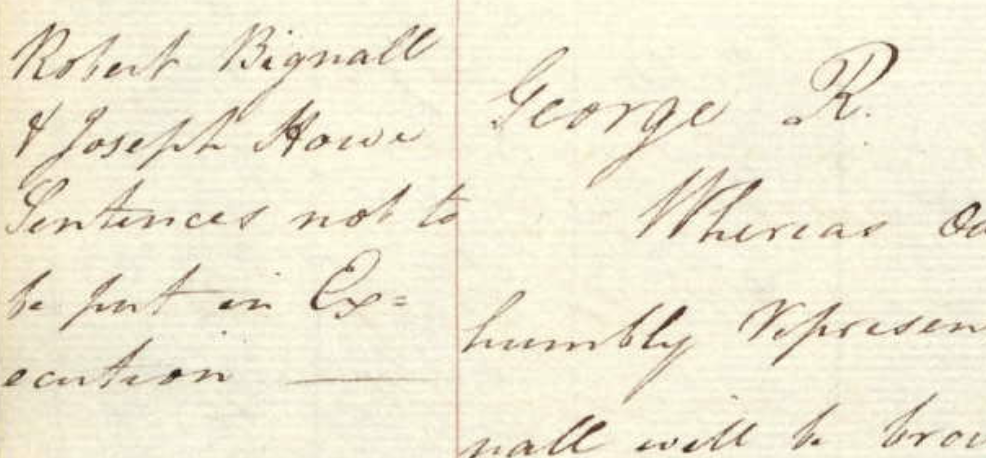
Caption: Excerpt from The Royal Order from King George III, intervening in the murder trial of Robert Bignall.
An Unbelievable Outcome
Despite the gravity of the crimes and the direct involvement of the Crown, the outcome was shocking:
Thomas Bartley and his associates were found not guilty of assault, partly because Robert Bignall was a wanted man.
Robert Bignall was found not guilty of murder.
The verdicts highlight the complex and often uncertain nature of justice in 19th-century England, where local loyalties and fear of informers could powerfully influence a trial's outcome.
The Rise and Fall of a Smuggler
After his acquittal, Thomas Bartley's life seemed to stabilise. By 1811, he was the sole landlord of the Royal Oak following the death of his mother. But his fortunes wouldn't last. Competition from the New Inn which opened opposite crippled his trade, and he eventually lost the pub. He returned to his old trade as a saddler but ultimately fell on hard times, dying in 1834 while receiving parish support.
What This Journey Can Teach You About Your Own Family History
This story isn't just about smugglers and kings. It’s about how history is pieced together—from a whisper of memory to an official royal decree. Here’s how you can apply these lessons to your own research:
Start With Family Stories.The memories of your relatives are priceless. They are the emotional core and often the first clue you have.
Verify Everything. One record, a single name on a birth certificate, can rewrite your entire family narrative. Never assume; always seek the primary source.
Embrace Local History.The most dramatic stories often aren't in large national archives. They’re hidden in local history books, county records, and village museums.
Expect the Unexpected.Your ancestors were more than names on a census. They lived through wars, crimes, and extraordinary social changes. You never know what you'll find.
Your Story Is Waiting to Be Discovered
If one family's search can lead from a grandmother's notes to a smuggler's trial and a Royal Order… what secrets are waiting in your family tree?
Start your journey today. Uncover the heroes, villains, and unexpected dramas that make up your unique past.
Ready to begin? Download my free guide to get started: Start Your Family History Guide
With thanks to my mum for working through this research