From Coffee House to Public House: The Blackburn Family in The Mint, Southwark | Untangling Family History
A Family Story Hidden in the Records
There are some family stories that sit in the records, waiting to be found. A name in a census. An entry in a street directory. A line in a probate register.
And then there are stories like this one, rooted in place, shaped by survival, and carried across three generations of the same family, on the same street, in one of London's most notorious neighbourhoods.
This is the story of the Blackburn family in The Mint, Southwark and what their quiet persistence tells us about life, work, and resilience in a corner of London that history often remembers only for its poverty.
A Man from Hertfordshire in a Notorious London District
Stephen Blackburn the elder, born in Stansted, Hertfordshire in 1774, arrives in south London at some point in the late 18th or very early 19th century. By 1813, when he marries a widow, Anne Garry, he is already described as a coffee house keeper suggesting he was established in the trade well before the earliest census records. His children are born in Southwark, confirming that the family was firmly rooted in the area from the start of his married life. By the time of the 1841 census, he is recorded running his coffee house in Mint Street but the marriage record pushes the story back almost three decades earlier.
That matters. Because it means the Blackburn family's connection to Southwark and quite possibly to The Mint itself, may stretch back to the Regency period, when the neighbourhood was still raw with the memory of its lawless past. The ancient sanctuary privileges had been abolished less than a century before. The workhouse on Mint Street was still relatively new. The streets were already overcrowded and poor. And into this world, a young man from Essex set up a coffee house and began to build a life.
How long was the coffee house on Mint Street? We can't yet say for certain whether Stephen was in Mint Street as early as 1813, or whether he started elsewhere in Southwark before settling there. But the marriage record opens up a tantalising possibility: that the Blackburn family's presence in The Mint could span not just three generations, but the better part of a century.
So already, from the very first record, we see something important about this family:
They weren't just surviving in The Mint. They were embedded in the life of the street.
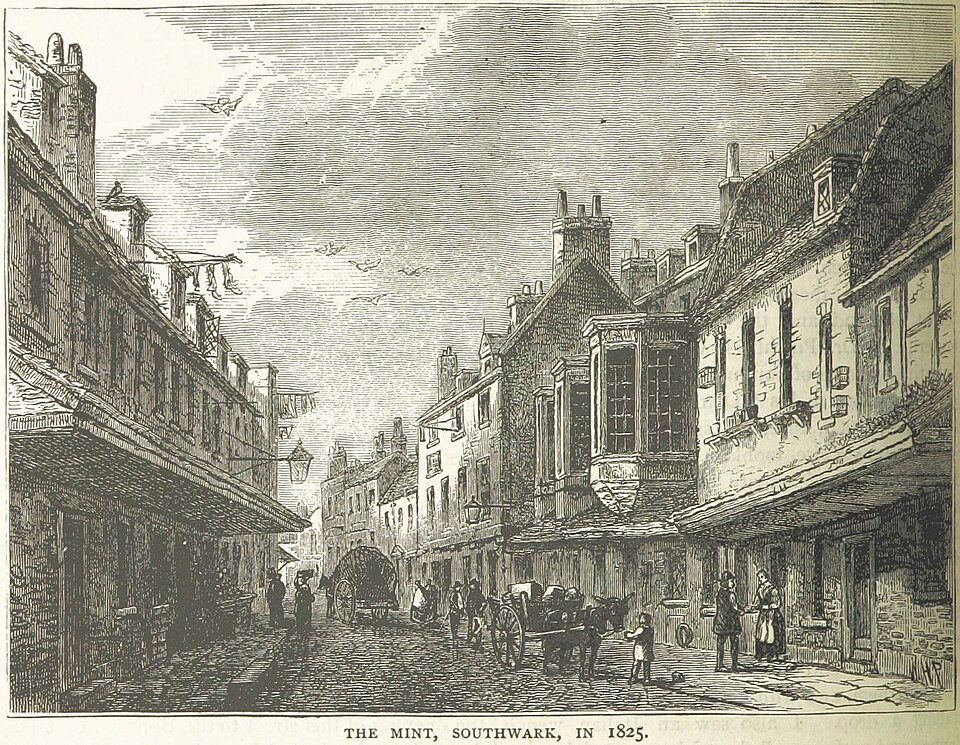
The Coffee House: More Than Just a Cup of Coffee
To understand what Stephen Blackburn was running in Mint Street, we need to understand what a coffee house meant in 18th and 19th century London, because it was a very different proposition from the coffee shops we know today.
A Very British Institution
Coffee houses had been at the heart of London life since the 1650s, when the first opened in the City. By the early 18th century, they had become one of the defining institutions of British culture. They were places where:
News circulated — before cheap newspapers, coffee houses were where you went to find out what was happening in the world. Many kept copies of newspapers and pamphlets for customers to read
Business was conducted — Lloyd's of London began as a coffee house. The Stock Exchange grew out of Jonathan's Coffee House. Auction houses, insurance firms, and shipping companies all had their roots in the coffee house trade
Ideas were debated — they were known as "penny universities" because for the price of a cup of coffee, you could sit and listen to conversations about politics, science, literature, and philosophy
Social mixing occurred — unlike the rigid hierarchies of other social spaces, coffee houses brought together people of different backgrounds and occupations
Sobriety was the norm — in an age when much of London's social life revolved around alcohol, coffee houses offered a sober alternative. Water was often unsafe to drink; beer was the default beverage for most people. Coffee provided stimulation without intoxication
The Working Man's Coffee House
By the early 19th century, the period when Stephen Blackburn was establishing his business, the coffee house landscape had shifted. The grand, intellectual coffee houses of the City had largely given way to clubs and taverns for the wealthy. But a new kind of coffee house was thriving in working-class neighbourhoods like Southwark.
These weren't the elegant establishments of the City. They were simpler, rougher, more practical places— but they served a vital function:
They opened early in the morning, serving workers heading to the docks, markets, and factories
They provided cheap, hot food as well as coffee — bread, butter, eggs, and simple cooked meals
They offered warmth and shelter — for people living in cold, cramped lodgings, a coffee house was somewhere to sit in relative comfort
They served as informal employment exchanges — word of available work often passed through coffee houses
They were meeting points — for friendly societies, trade groups, and informal community networks
And they were, crucially, not pubs — which made them acceptable to the growing temperance movement and gave them an air of respectability that a gin shop or alehouse could never claim
For the poorest residents of an area like The Mint, a coffee house might be the closest thing to a community centre that existed. It was somewhere between a business, a social service, and a neighbourhood living room.
A Coffee House in The Mint
Imagine, then, what Stephen Blackburn's coffee house in Mint Street might have looked like and felt like.
A low-ceilinged room, warm from the fire and the great copper urn that kept the coffee hot. Simple wooden tables and benches, worn smooth by years of use. The smell of coffee and toast and tobacco smoke. A newspaper or two, passed from hand to hand and read aloud for those who couldn't read themselves.
Early in the morning, labourers and costermongers stopping in for a penny cup of coffee and a slice of bread before heading to Borough Market or the wharves along the river. Later in the day, older residents settling in for a longer stay, a place to sit, to talk, to escape the cramped and often freezing rooms they called home. In the evening, perhaps, small groups meeting to discuss mutual aid, to plan, to share what little news they had.
And outside the door, the life of The Mint swirling past, the workhouse at the end of the street, the lodging houses packed to bursting, the children running errands or picking pockets, the women doing laundry or selling whatever they could.
The coffee house sat at the centre of all this. Not grand. Not fashionable. But essential.
Did Dickens Ever Drink Coffee Here?
It's impossible to resist the question, and impossible, with current evidence, to answer it definitively. But the possibility is tantalising.
We know that the young Charles Dickens lodged in Lant Street, just minutes from Mint Street, while his father was imprisoned in the nearby Marshalsea. We know he walked these streets daily on his way to work at Warren's Blacking Factory. We know he was a boy of about twelve, alone in one of London's roughest neighbourhoods, desperately unhappy, and acutely observant.
Did he ever step into Stephen Blackburn's coffee house for a warming cup on a cold morning? Did he sit at one of those worn wooden tables and watch the life of The Mint unfold around him? We can't say for certain.
But we do know that Dickens returned to these streets as an adult, repeatedly. His journalism shows a man who walked London compulsively, often at night, often in its poorest neighbourhoods, observing everything. He visited workhouses, hospitals, prisons, and slums. He wrote about what he saw with a precision that could only come from direct, personal experience.
And we know that Stephen Blackburn's coffee house was already established by 1813, a full decade before Dickens' childhood sojourn in Lant Street in the early 1820s. The coffee house was there, on the same street the boy walked every day.
The thought of the young Dickens, the future chronicler of London's poor, the man who would create Oliver Twist, Little Dorrit, and a gallery of characters drawn from exactly this world, sitting in a Mint Street coffee house, warming his hands on a cheap cup of coffee, watching the Minters come and go...
It's unprovable. But it's not impossible. And for a family historian, sometimes the unprovable possibilities are the ones that make the story sing.
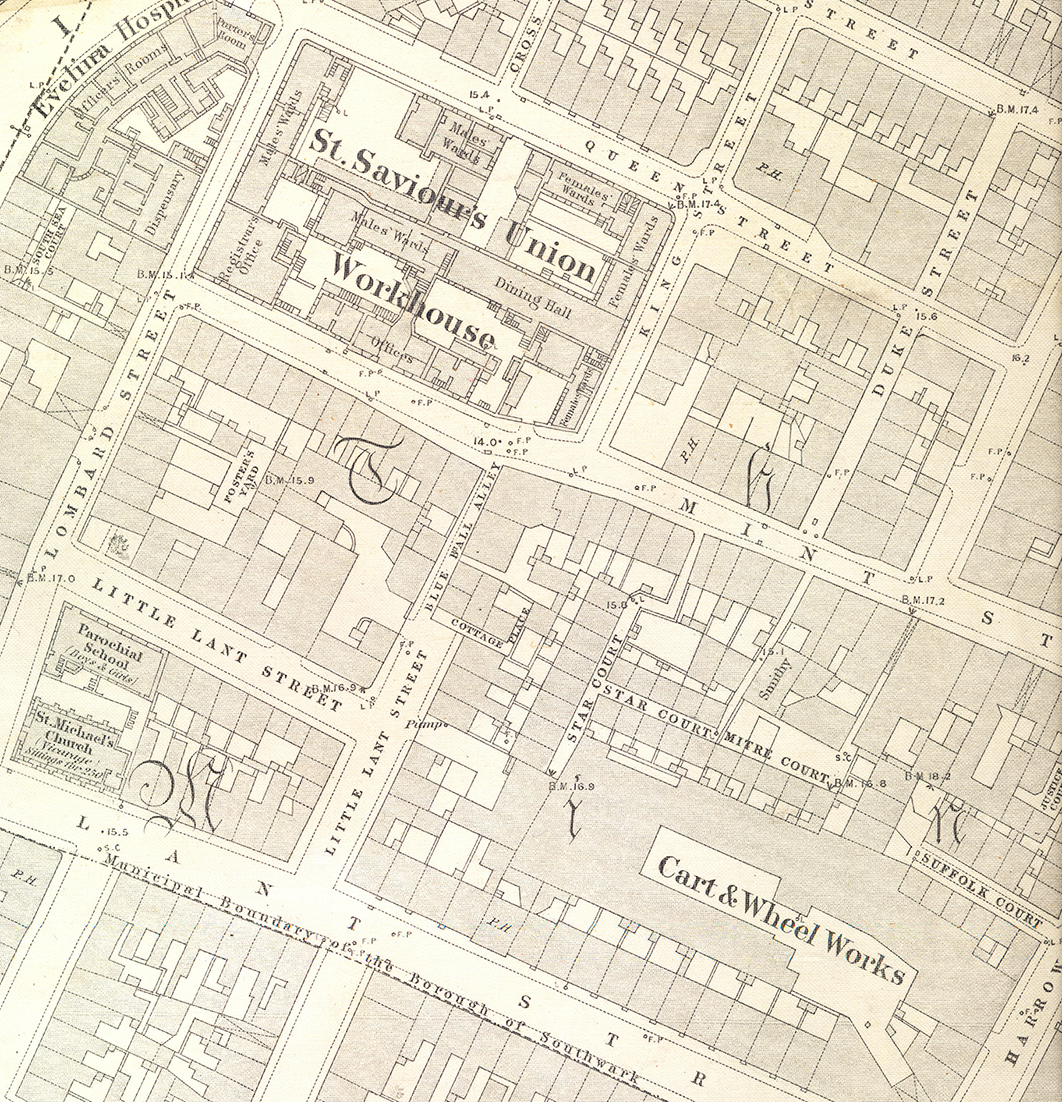
19th Century Map showing Lant Street where Dickens lodged at the bottom and Mint Street one block north.
Reading the Records Together
One of the most rewarding things about genealogy is what happens when you layer records together. Individually, a census entry or a directory listing tells you a single fact. But when you place them side by side, the picture sharpens and a life begins to emerge.
For Stephen Blackburn, the records align beautifully:
Marriage record (1813) identifies him as a coffee house keeper even before the census era begins
Baptism records show his children born in Southwark, confirming long-term residence
Census returns place him as a coffee house keeper in Mint Street
Street directories confirm his presence in Mint Street
Probate records (1876) confirm both occupation and address
And crucially, the records show the business passing to his son William
This is continuity, not just of family, but of place and trade. Father to son. Same street. Same business. In an area defined by instability, transience, and poverty, that kind of continuity is quietly remarkable.
From Father to Son: Stability in a Changing Street
William Blackburn, my husband's 3rd great-grandfather, takes over the coffee house from his father and continues to run it from Mint Street.
London is changing rapidly at this point. The mid-to-late Victorian period brings:
Explosive population growth across south London
Waves of migration both from rural England and from overseas
Increasing visibility of poverty, documented by journalists, reformers, and public health investigators
The beginnings of reform movements that would eventually transform the Poor Law and public health provision
The Mint itself is changing too. The old St Saviour's Union Workhouse still stands on Mint Street, a grim daily reminder of what happened to those who fell through the cracks. The Lancet (1865) has already condemned it as"a den of horrors." The streets are still overcrowded, still poor, still tough.
But the Blackburn business remains.
And that persistence tells us something subtle but important. This was likely a known, reliable local establishment, a place where working people came regularly, where the proprietor was a familiar face, where the coffee was hot and the company was steady.
Not elite. Not wealthy. But dependable. And in a neighbourhood like The Mint, dependability was worth its weight in gold.
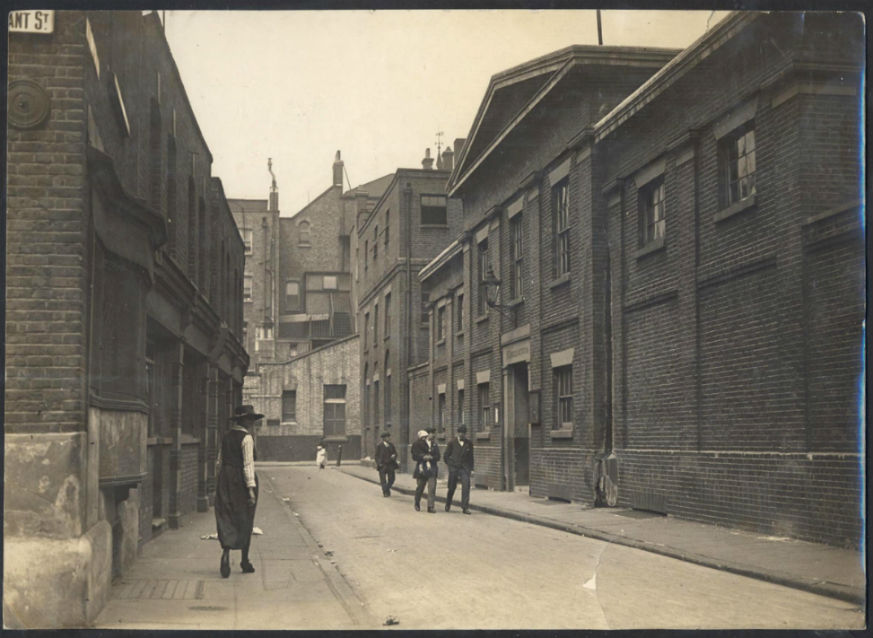
Mint Street Workhouse, Southwark, photographed in 1907, showing the stark institutional buildings lining a quiet London street.
What They Left Behind: Money, Meaning, and Status
One of the most revealing records in genealogy isn't the census. It isn't the parish register. It isn't even the street directory.
It's probate.
Because probate tells us not just who someone was, or where they lived, or what they did for a living. It tells us what they were able to leave behind. And in a neighbourhood like The Mint, where so many people died with nothing at all, the existence of a probate record is itself significant.
From the Blackburn family records:
William Stephen Blackburn (d. 1876) left effects valued atunder £200
Edith Blackburn (d. 1877) left effects valued at under £300, later resworn at £450
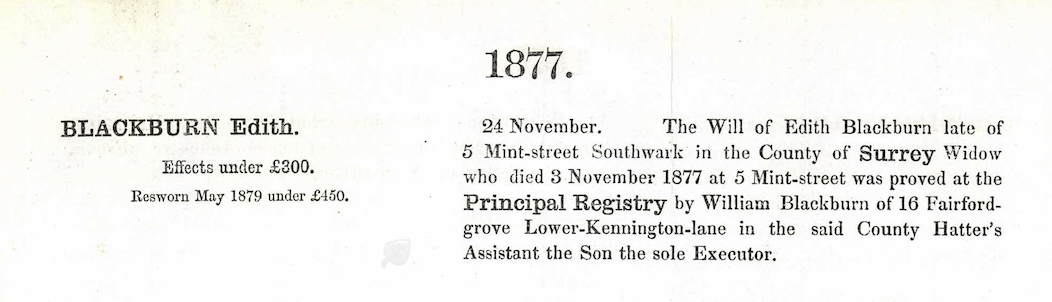
Probate record for Edith Blackburn (1877), widow of 5 Mint Street, Southwark, showing her estate valued at under £300 and later resworn to £450, evidence of modest financial security in Victorian London.
At first glance, those figures might feel modest. Two hundred pounds. Four hundred and fifty pounds. Not fortunes by any measure.
But context is everything. When we translate those sums into modern terms, the picture shifts dramatically.
Edith's £450 in 1877 is roughly equivalent to £45,956 today.
Nearly forty-six thousand pounds. Left by the wife of a coffee house keeper in one of London's poorest neighbourhoods.
That number tells a story all by itself.
Not Wealthy But Not Destitute Either
The probate figures place the Blackburn family in a fascinating, and often overlooked, position in the social landscape of Victorian Southwark.
They were not among the poorest residents of The Mint. They were not living in the kind of grinding, hand-to-mouth destitution documented by The Lancet in the workhouse just yards from their door. They were not dependent on poor relief.
But they were also not wealthy. They were not part of the established middle classes. They were not property owners on a grand scale. They were not moving in the circles of the merchants and professionals who lived in Southwark's more respectable streets.
Instead, the Blackburns sit in that often invisible space in between:
Financially stable working class, or perhaps lower-middle class.
The kind of people who:
Ran businesses rather than working for others
Managed carefully — every shilling counted, every decision mattered
Built something over time — slowly, steadily, without drama
And crucially — left something behind for the next generation
In the historical record, these families are easy to overlook. They don't appear in the dramatic accounts of destitution that fill reformers' reports. They don't feature in the stories of great wealth and social climbing that dominate Victorian novels. They exist in the middle ground — too comfortable for the workhouse, too modest for the history books.
But they were the backbone of neighbourhoods like The Mint. And the Blackburns are a perfect example.
A Quiet Kind of Success
When you connect the probate records with everything else we know about the family, a richer picture emerges:
A coffee house sustained across at least two generations and possibly dating back as far as 1813
A physical presence in a notoriously mixed and often poor area, not for a year or two, but for decades
A later shift into publican life, likely increasing the family's income potential
And ultimately, the ability to accumulate and pass on assets, something many of their neighbours could never dream of
In places like The Mint, success didn't always look like wealth. It didn't announce itself with grand houses and fine carriages. Sometimes it looked like:
Staying put when others were forced to move on
Keeping a business going through good years and bad
Supporting a family in a neighbourhood where families regularly fell apart under the pressure of poverty
And leaving a financial cushion, however modes, for those who came after
Edith Blackburn's £450 isn't just a number on a probate record. It's evidence of security in a place where many had none. It represents years of careful management, steady trade, and quiet determination. It's the kind of success that doesn't make headlines, but it changed the trajectory of a family.
A Shift in Identity: From Coffee House to Public House
By the next generation, Stephen Blackburn the younger, my husband's 2nd great-granduncle, is still there in Mint Street. The 1881 census shows him continuing the family's presence in The Mint, maintaining the connection to the street that had been the Blackburn family's home and workplace for decades.
But by 1891, something has changed. Stephen is no longer recorded as a coffee house keeper.
He is now a publican living in rooms at 63 Cambridge Terrace, St George Hanover Square.
That shift, from coffee house to public house, is more than just a change of product. It reflects a broader social transformation that was reshaping working-class London in the late Victorian period.
Coffee houses in the early and mid-19th century were associated with:
Work and sobriety — they were places where people gathered before and during the working day
Conversation and news — before mass literacy and cheap newspapers, coffee houses were where information circulated
Respectability — temperance campaigners actively promoted coffee houses as alternatives to pubs and gin palaces
Public houses, by contrast, were tied to:
Leisure and socialising — the pub was where you went after work, not before it
Alcohol — beer, spirits, and the social rituals that surrounded them
Community identity — the local pub was often the heart of a neighbourhood's social life
So within one family, across two generations, we see a move from coffee to alcohol. From the sober, industrious world of the early Victorian coffee house to the convivial, sometimes rowdy world of the late Victorian pub.
But this wasn't a decline. It was an adaptation.
Stephen the younger was responding to what the community needed, and to what would sustain a business in a changing world. Coffee houses were fading; pubs were thriving. The smart move, the survival move, was to follow the market. And that's exactly what he did.
What Booth's Map Reveals
By the 1890s, we have an extraordinary resource that allows us to see the Blackburns' neighbourhood in vivid, colour-coded detail: Charles Booth's poverty maps.
Booth and his team of investigators walked every street in London, recording the social and economic character of each block. The results were published as a series of maps in which every street was coloured according to the wealth, or poverty, of its residents.
When we look at Mint Street on Booth's map, something interesting emerges. The street is no longer uniformly poor. Instead, it shows a mix:
Dark blue — very poor, chronic want
Light blue — poor, 18s to 21s a week for a moderate family
Pink and red— mixed, some comfortable
Even patches of relative comfort
That mix matters enormously for understanding the Blackburns' world. It tells us that by the 1890s, The Mint was not the homogeneous slum of popular imagination. It was a patchwork, a neighbourhood where extreme poverty existed side by side with modest comfort, where a destitute family might live next door to a small business owner, where the workhouse and the pub occupied the same street.
The Blackburns, with their long-established business and their ability to accumulate assets, likely sat at the more comfortable end of this spectrum. Their pub would have served customers from across the social range, the very poor spending their pennies on a pint of beer, the slightly better-off enjoying an evening's socialising, the casual labourers and the regular tradesmen all rubbing shoulders in the same room.
The Blackburns lived through, and adapted to, a changing neighbourhood. Their business sat right at the intersection of different social worlds. And that, perhaps, was the secret of their longevity.
A Family Rooted in Place
Across three generations, what stands out about the Blackburn family isn't just survival, though surviving in The Mint for decades was no small achievement.
What stands out is anchoring.
Stephen the elder arrives, marries Anne Garry in 1813, and establishes a coffee house, possibly in Mint Street from the very beginning
William takes over, continues the business, and stabilises the family's position
Stephen the younger leaves The Mint and adapts the business to a changing world, shifting from coffee to beer
In a neighbourhood defined by transience, where people moved constantly, driven by debt, eviction, or the search for work, the Blackburns stayed. They put down roots in unpromising soil, and those roots held. Three generations. One street. A family business that evolved with the times.
From Stephen's marriage in 1813 to Stephen the younger's appearance as a publican in 1891, the Blackburn family's presence in Southwark spans nearly eighty years. That kind of stability is rare in any historical period. In a place like The Mint, it's extraordinary.
Why This Story Matters
It would be easy to describe The Mint simply as "poor", to paint it as nothing more than a slum, a place of misery and deprivation. And for many of its residents, that description was painfully accurate. The workhouse records, The Lancet reports, and the poverty maps all testify to the depth of suffering that existed on these streets.
But the Blackburn family story shows us something much richer. It shows us:
Enterprise in a difficult environment — the courage to start and sustain a business in one of London's toughest neighbourhoods
Continuity across generations — the commitment to stay, to build, to pass something on
Adaptation to social change — the willingness to evolve when the world around you is shifting
And steady progress - not dramatic wealth, not rags-to-riches, but the slow, careful accumulation of security in a place where security was rare
This isn't a story of dramatic fortune. There are no sudden windfalls, no grand houses, no titles or honours. It's a story of building something that lasts. Of showing up, day after day, in the same street, serving the same community, keeping the doors open and the business running.
And in a place like The Mint, where the workhouse loomed at the end of the street, where poverty pressed in on every side, where so many families were broken by debt and destitution, that might be the most remarkable achievement of all.
Tracing Your Own Family in The Mint
If your ancestors lived in The Mint or the surrounding Southwark streets, the records that brought the Blackburn story to life could do the same for your family:
Census returns(1841–1911) — available on Ancestry, FindMyPast, and FamilySearch
Marriage and baptism records — which can push the story back before the census era, as the Blackburns' 1813 marriage record demonstrates
Street and trade directories — which can confirm business addresses and occupations
Probate records — searchable at probatesearch.service.gov.uk
Parish registers for St George the Martyr and St Saviour's — at the London Metropolitan Archives
Poor Law and workhouse records — also at the London Metropolitan Archives
Charles Booth's poverty maps — free at booth.lse.ac.uk
Old Bailey proceedings — free at oldbaileyonline.org
Historical newspapers — at the British Newspaper Archive
The key is to layer the records together just as we did with the Blackburns. No single document tells the whole story. But when you place census, directory, marriage record, probate, and map side by side, the picture sharpens, and a life begins to emerge from the silence.
Start Your Own Family History Journey
Every family has a story waiting to be uncovered, whether your ancestors ran a coffee house in The Mint or lived in a completely different corner of the country. If the Blackburn story has inspired you to start exploring your own family's past, my Beginner's Guide to Family Historywill walk you through everything you need to know to get started.
Note on FindMyPast
Many of the records mentioned in this post, census returns, parish registers, and more, are available on FindMyPast. If you're thinking of subscribing, you can use my referral link to get25% off your first subscription. It's one of the tools I use regularly in my own research, and I wouldn't recommend it if I didn't find it genuinely useful.
Find out more about The Mint in our post here
Brown, R. Gibson (1865) St. George-the-Martyr Infirmary. The Lancet, 86(2193), p.304. Published 9 September 1865.
Available at: https://doi.org/10.1016/S0140-6736(02)50258-0