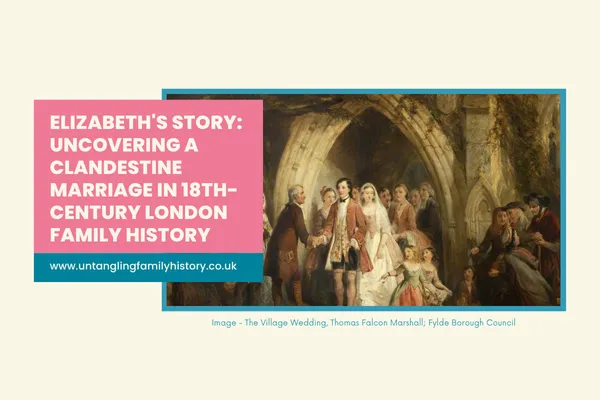
Elizabeth's Story: Uncovering a Clandestine Marriage in 18th-Century London Family History
Elizabeth's Story: Uncovering a Clandestine Marriage in 18th-Century London Family History
There are moments in family history research when a single record opens a door into an entirely different world.
For me, that moment came when I searched for the marriage of my 6× great-grandparents, William Sageman and Elizabeth Ivory.
What I found wasn't just a marriage entry.
It was a story of secrecy, uncertain identity, and quiet resilience — preserved in one of genealogy's most fascinating and overlooked sources: the London Clandestine Marriage Registers.
What Are Clandestine Marriage Records? And Why Do They Matter for Family History?
The marriage of William Sageman and Elizabeth Ivory appears in the London Clandestine Marriage Registers records that immediately raise questions for any family history researcher.
Why was the marriage clandestine?
Why not marry in a parish church, as the vast majority of couples did in Georgian England?
And why do three separate records exist for the same marriage?
The earliest entry is dated 5 July 1737, followed by two further records dated 18 June 1738, all describing:
William Sageman, bachelor
Elizabeth Ivory, spinster
Even the repetition feels unusual as if something about the marriage required reinforcement, or perhaps correction.
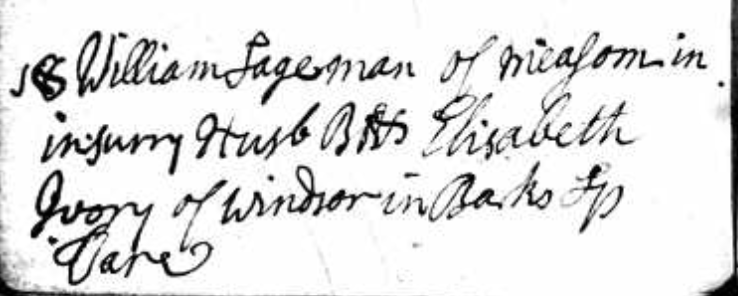
Marriage entry for William Sageman and Elizabeth Ivory, recorded in a Fleet register, 18 June 1738 — an example of a clandestine marriage outside traditional parish rules.
These records come from the Fleet marriage notebooks, associated with one of the most notorious centres of irregular marriage in 18th-century London. The Fleet Prison area became infamous for performing marriages outside the rules of the Church of England, no banns, no licence, few questions asked.
For genealogists researching London ancestors before 1753, the Fleet registers are an essential, if complex, source.
Quick Fact:The Marriage Act of 1753 effectively ended clandestine marriages in England and Wales by requiring all marriages (except Quakers and Jews) to take place in the Church of England.
Elizabeth Ivory: Who Was She Before William Sageman?
To understand this clandestine marriage, we have to understand Elizabeth.
Elizabeth Ivory was baptised on 22 April 1702 at St Dunstan's, Stepney, a parish that appears frequently in East London genealogy records of the period. She would have been around 35 years old at the time of the clandestine marriage, well beyond the typical age of first marriage for women of the period.
But more importantly, she had already been married.
In 1720, Elizabeth married William Shon, a butcher from Limehouse. That marriage ended with his burial on 26 June 1737, just nine days before the first recorded clandestine marriage to William Sageman.
This raises a powerful question for family historians:
Did Elizabeth even know her first husband had died?
Or, perhaps more likely, she moved quickly, out of necessity rather than choice.
Widowhood in 18th-century England could be precarious. Financial security, housing, and social standing were all at risk. For working-class women in particular, remarriage was often less about romance and more aboute conomic survival.
A Changed Name, A Different Address: Identity and Clandestine Marriage
At the time of her marriage to William Sageman, Elizabeth does something that family history researchers will recognise as significant.
She returns to her maiden name, Ivory, and claims her residence is in Windsor, Berkshire, rather than her known home of Stepney.
There is no clear evidence placing her in Windsor.
So why give that address?
Possible explanations include:
She had recently relocated and gave her current place of residence
She wanted to create distance from her previous marriage and identity
She was deliberately obscuring her identity a common pattern in Fleet marriage records
In clandestine marriages, this kind of ambiguity is not unusual. The entire purpose of the Fleet and similar irregular marriage venues was to ask fewer questions. For genealogists, this makes interpretation challenging — but also compelling.
Who Was William Sageman? The Elusive Groom
William is the more elusive of the two.
There is no confirmed baptism record, and little trace of him before the marriage. He is described in the registers as a bachelor and later associated with Surrey.
One detail stands out in family oral history: William was believed to be a Romani Gypsy.
If accurate, this adds another significant layer to the story.
Marrying outside settled society, particularly into a marginalised or itinerant community, may have made a traditional Church of England marriage difficult or socially undesirable. A clandestine Fleet marriage, with fewer questions asked and no parish ties required, would have offered a practical and accessible solution.
For researchers tracing Romani Gypsy ancestry in England, the Fleet registers may offer unexpected connections precisely because of this flexibility.
What Happened After the Marriage?
Despite its unconventional beginnings, the marriage appears to have been lasting.
William and Elizabeth settled in Surrey, where both are recorded in burial registers:
William Sageman was buried in 1797 at West Horsley, Surrey
Elizabeth died in 1802, aged an extraordinary 101 years, and was buried at St Katherine's, Merstham, Surrey
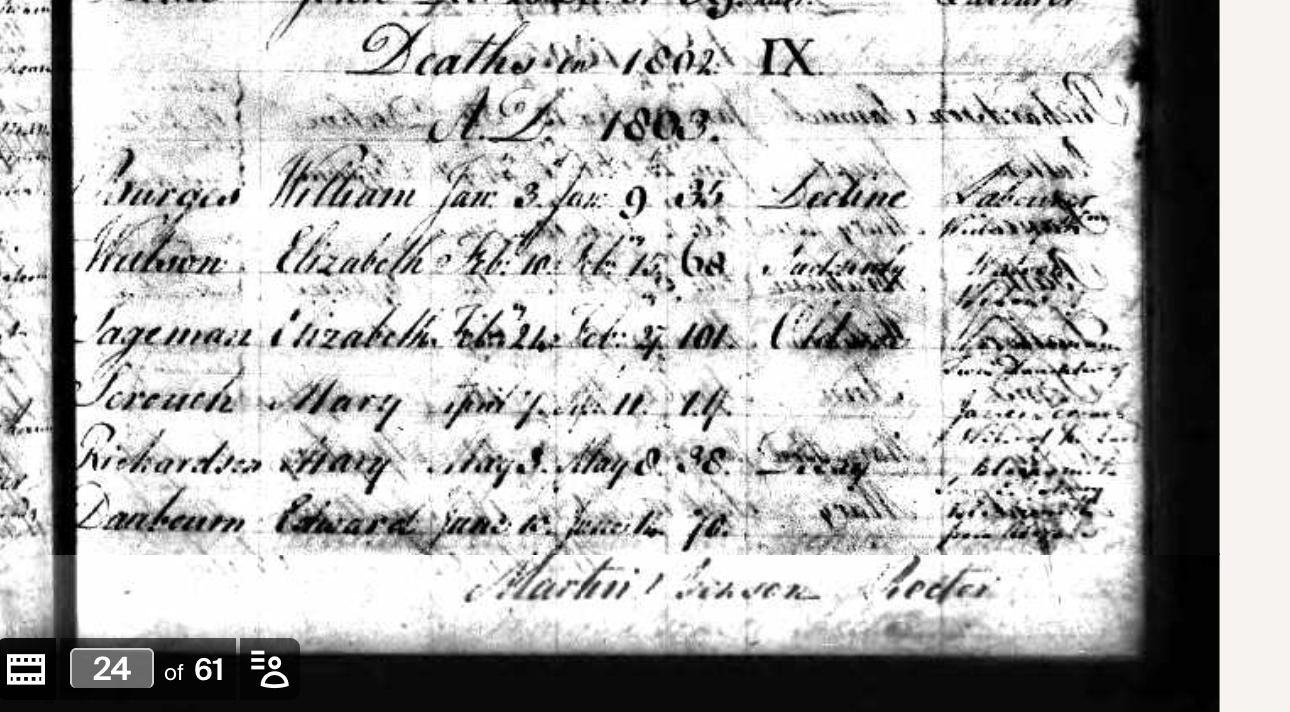
Burial record of Elizabeth Sageman, February 1802 — noted as a widow aged 101, offering a rare glimpse into the remarkable longevity of an 18th-century life.
Her burial record includes a detail that stops you in your tracks:
"Widow of William Sageman – Poor House – Age 101"
There is something profoundly moving in that final entry.
A woman who navigated widowhood, remarriage, social complexity, and the full span of the18th century ending her days in the poor house, yet leaving behind a traceable, recoverable story.
Why Clandestine Marriage Records Are Valuable for Genealogy Research
Elizabeth's story is a reminder of why clandestine marriage registers deserve a place in every family historian's research toolkit.
These records capture people who existed outside the normal documentary framework, those who couldn't, or wouldn't, marry through conventional channels.
They include:
Widows and widowers remarrying quickly
Couples where one or both parties weref rom marginalised communities
Those seeking to avoid family or creditor scrutiny
People marrying across social or religious lines
The London Metropolitan Archives and Ancestry UK hold digitised versions of many Fleet and clandestine marriage records, making them increasingly accessible to researchers.
Key Takeaways for Family Historians
Search clandestine marriage records if you can't find an ancestor in standard parish registers
Check burial dates carefully, a gap of just nine days, as in Elizabeth's case, can reveal the full picture
Don't assume maiden names are straightforward, women sometimes reverted to earlier names in irregular marriages
Cross-reference addresses given in Fleet records with other sources; they may be false or aspirational
Oral family traditions about ancestry (such as Romani heritage) can offer meaningful research leads even when documentation is thin
Conclusion: What Elizabeth's Story Tells Us
Family history is rarely tidy.
Records don't always align neatly. Names change. Timelines overlap. And behind every document is a real person making decisions within the constraints and pressures of their time.
Elizabeth Ivory's clandestine marriage was not merely a genealogical irregularity.
It was a choice shaped by circumstance, survival, and perhaps a determination to continue, a story that only becomes visible when we look beyond the standard records and ask harder questions.
Learn more about Clandestine Marriages here
Enjoyed this post? Share your own experiences researching clandestine marriage records in the comments below.